Wednesday, October 29, 2008

How Do Media Professionals 'Know' Their Audiences?

The shortening of audience attention spans and lack of interest in 'hard news' has caused most of the news networks to commercialize news their content. Because of the introduction of the Internet as a source of news and the high volume of different news stations, competition in the industry is extremely high. News networks cannot risk turning audiences away because there are so many other competitors to which viewers can turn. Thus, it is obvious how imperative it is for media professionals to know and understand their audience's wants and needs.

In the search to discover what it is that audiences want, many media professionals perform qualitative research. Stuart Hall' encoding and decoding method looks at both the production and reception of media messages. There are four different codes which are used to create meaning by both media professionals and audiences: the dominant code, the professional code, the negotiated code and the oppositional code. The dominant code includes audiences who interpret a message in the same way the professionals presented it. The professional code deals with how the professionals produce the media so that it tells the story in the dominant code. The negotiated code encompasses audience members who accept the majority of the news story but refute any ideas or messages which don't fit inside their world views. Lastly, the oppositional code contains audience members who do not accept the intended meaning of the message at all. With the use of Hall's encoding and decoding method and looking into the political, economical, technological and social norms of the current society, media professionals can gauge what information is relevant to the audience's wants and needs as well as the best way to produce and supply the information.

While in some aspects, the media professionals do look to their audiences for interests and responses, often times what makes up the media's content is out of the media professionals immediate control. As the book states, professionals can be constrained by organizational and external factors. The culture and ethos of an organization can have a strong impact on what information and news gets placed into the media. Additionally, the monetary power of advertisers and sponsors can also have a big impact on what the media content encompasses. Media professionals may also feel pigeonholed into safe, easy topics for fear of negative audience reactions. While media professionals may spend a lot of time researching to find the best news and information for their audiences, they may not even be able to provide exactly what the audience wants.

Pixel v. Vector Quiz

Tuesday, October 28, 2008

Money As Debt

I found Paul Grignon's movie, "Money is Debt", to be really interesting and enlightening. It's always surprising to learn something new about a concept that seems so simple. The fact that had the most impact on me was that more than 95% of money used today is created by bank credits and less than 5% of money used is actually produced by the US Mint. The idea that so much of the money that circulates throughout our country is in a sense, non-existent is baffling. It's also interesting that the little money that is produced by the Mint isn't even backed by anything but the government's word.

Because the money created for our use is primarily produced by banks, the bankers control the economy. Therefore, they decide who gets money and who does not. The whole idea that we have a free economy and are a capitalistic society is refuted because private banks are holding the reigns behind the scenes. Thus, the future of industries depends bankers and their decision as to whether or not to lend money or at what price.

When learning about this concept, the first thing thought about was whether or not we should pay off all the debts are start fresh. However, Grignon points out that this is not a possibility because our money system is dependent on perpetually accelerating growth. If we pay of all debts than there would not be any money. Because our society and economic systems need loans in order to function, people and banks will still be loaning our money. Just as we do now, the person who received the loan would pay back the principal amount as well as the interest. Therefore, everytime someone takes out a loan, a little more of the money supply will return to the lender. Thus, if we had a set amount of money, eventually all the money would be owned by one person. Grignon says this problem would only be solved if the proceeds of lending at interest are distributed evenly throughout the population such as taxing the profits of banks. Then, the banks wouldn't lend money for profit, but instead replace the interest back into society. Banking would be free and only for the purpose of benefiting society and not private companies.

While Grignon puts much of his information into plain and simple language, it's still somewhat hard to completely comprehend because it's something I've never learned or even thought about before. His video was really interesting and I'd like to continue looking into the whole scenario. It will be interesting to see if society ever revolts and demands a change in the money system and what would become of private banks.

Wednesday, October 22, 2008

Animation

I chose to continuing using the Disney Corporation as my muse. After hearing the assignment I pictured exactly what I wanted to do and I'm pleased with how it came out. I chose a frame of mickey mouse and placed the different branches, divisions and companies owned by Disney flashing inside. Towards the end I put an image of Tinkerbell, followed by the fireworks that often erupt from her wand and close with the image seen on the left. The images start out flashing slowly at first and then speed up until the last frame. I wanted to finish with this image because it's representative of how Disney is prevalent in almost every country throughout the world. Furthermore, in a satirical sense, it represents how Disney has the possibility of taking over media companies worldwide.

Wednesday, October 15, 2008

Illustrator Studio - Magazine Cover

I found this cover when searching for one to choose for the assignment. It interested me because at first I assumed that the picture was a depiction of how so many Americans have lost their homes due to foreclosure. When I took a closer look I saw that it was from a few years ago and instead the cover was pointing out the booming real estate market. Finding this cover today is ironic as the state of our economy is no where near where it was in 2006. The news all throughout this past summer was about the number of foreclosures and bankruptcies occurring throughout the country. Many Americans were over spending and once they weren't able to make payments they began to rely on credit and eventually declare bankruptcy. This reliance on credit is frighteningly similar to the situation in which the Great Depression arose.

When working on the cover in Illustrator, I wanted to depict today's current real estate market. Middle class and upper-middle class families were the ones hit the hardest. Many of the houses that foreclosed were larger suburban homes. Families were shocked and upset at the loss of their homes and their financial stability. Additionally, the idea of the American Dream is no longer as reachable and promising as it used to be. With gas and food expenses rising alongside inflation and the American dollar falling in value, Americans aren't able to spend or save the way they used to.

Wednesday, October 8, 2008

Quiz - Media Globalization

1. The emergence of and continued dominance of the global media industry by a small number of transnational media conglomerates.
5. The uneven flow of information and communication products within the global system and the different levels of access that global citizens have to global networks and communication.
6. The promotion of the ideology of consumerism which is therefore bound up wit the capitalist project.


(1) The globalization of the media industry has lead to the formation of just a select few all-powerful transnational media conglomerates. Time Warner, Disney, Viacom and the News Corporation each maintain the high status of being one of the few companies which holds significant power over the world’s media. These large corporations often own, or maintain interest in consumer products and services in addition to their media outlets. Time Warner holds interests in AOL America, HBO, New Line Cinema, Time Inc., Time Warner Cable, TBS Turner Broadcasting, and Warner Brothers Entertainment. Disney maintains stakes in dozens of different companies in all different industries. For example, Walt Disney Studios, Disney-ABC Television Group, ESPN Inc., Walt Disney Internet Group, dozens of Disney consumer products, and their famous Walt Disney Parks and Resorts.

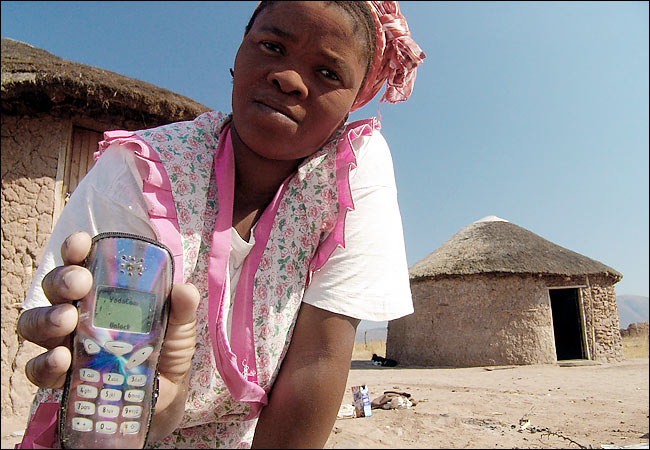
(5) What is interesting about the idea of media globalization is that there are still many parts of the world that do not have the same amount of access to media as many western countries do. For example, there are many areas of Africa and South Asia that do not have access to all the different forms of media that a typical American would. This has caused a ‘digital divide’ between the different societies. Some believe it to be also a result of social class, education, geography, attitudes towards media, the generation in which one grew up in, and even physical disability. As Devereux states, “One’s ability to participate in a wire world is not a give. It is socially and economically determined.” Many internet and cell-phone service providers state that they’re service will keep you connected worldwide. In fact, Verizon states their Business package, Enterprise Mobility Solutions, will “keep corporate end-users connected globally”. When thinking about this critically, it is easy to wonder whether they truly have the capability of maintaining a connection in every part of the world. Secondly, the technology required to be able to maintain connection is most likely offered only in America, or at most a few other Western countries. This leads to the point that not everyone has complete access to all forms of media. There are many areas of the world that are still untapped by the internet, cable, or telephone lines. It is in these areas that they citizens have little access to the technology needed to gain access to forms of media, whether it is due to economical or social constraints.

(6)Many people believe that the large media conglomerates hold too much power. This connects to both points one and five. Because these corporations have so much power, they hold a lot of sway in how members of different societies are exposed to information. While point number five points out that there are areas in the world that have no access to the media, there are even more areas that are only exposed to a small amount of media. It is in these societies that the large media conglomerates can be seen as too powerful. The large corporations may very well be the only media provider in certain areas of the world. With no competition from the other conglomerates, they maintain free reign on what media is provided and how it is presented. The news can be told in ways which are biased and therefore cause society to misunderstand important issues. Additionally, as explained in point one, many of these media conglomerates hold stakes in consumer products and services. Thus, if they are the only media provider, they are most likely only going to promote and advertise their own goods. The effect on society is that they are uninformed about their consumer options and often forced into accepting certain branded identities because it is both consciously and subconsciously forced on the society. Many believe that the large corporations are run purely on intentions of gaining profit and therefore force feed societies media laced with consumerism hoping to make a quick buck.

Media globalization has caused a lot of concern over the power held by thy large media corporations. Not only do they maintain lots of power on what they put in their media, but they also can present it in any way they wish. The fact that many areas don’t have full and complete access to all forms of media creates the uneven, digital divide. Depending on their geographic location, different people have different access to information. Thus, people who aren’t able to gain access to full information cannot make smart and informed decisions. Several scholars and researchers believe this lack of information can lead people in societies to be forced into a mass consumer frame of mind. In areas of the world which don’t have complete media access, there is a fear that these citizens will fall under the large media conglomerates superiority and change their form of consumption in ways that may be hazardous to their economical and physical lifestyles.

Tuesday, October 7, 2008

Media Globalization and Resistance

Media globalization is currently dominated by a few powerful transnational media conglomerates. These large corporations virtually have free reign on how they operate as the environment is pretty much unregulated. This allows for the global media industry to have a lot of power in deciding what information is provided to the public and how it is presented. Additionally, these media conglomerates have enormous opportunity when it comes to promoting their own subdivisions. By having so much control over the media, the corporations can easily promote the other products or services they own.

Due to their high level of power in terms of promoting information and products and services, many people believe that the corporations only do things which will serve their own interests and not necessarily think about what is best for the society. Additionally, many scholars believe that corporations are creating a period of media imperialism. If citizens are only provided with certain information and are only aware of certain products or services, they are, in a sense, being taken advantage of. There are several parts of the world in which societies are not able to access a lot of media. Thus, what little media they are able to access only provides them with so much information.

Because many of the media conglomerates are headquartered and run in Western countries, many believe that media globalization is causing a cultural homogenization. There is fear that soon Western products and Western forms of media will completely dominate the global market because Western companies hold the reigns over much of the global media. On the other hand, many people have performed research on this very topic and have found that while many societies do accept and enjoy Western media, they still maintain strong ties to their own culture. Others have even gone on to say that media globalization has instead created stronger local cultures as societies have seen other cultures and in turn, gained greater respect for their own.

Still, many people believe that large corporations are causing negative affects and ruining the different cultures around the world. Many resistance groups have formed as a result. The Yes Men is an activist group who’s purpose is, “impersonating big time criminals in order to humiliate them.” They believe the large media conglomerates are only in their business to make a profit at the expense of everyone else. They often take such outrageous positions it can end up being comical. Whether this tactic is successful is difficult to tell. The Yes Men take a more passive form of resistance, but do a good job of providing information and an alternative view. Naomi Klein wrote a book which inspired the movie “No Logo”, which looks at how corporations have stopped focusing on creating products and instead on how to create brand identities which are then incorporated by people into their own lives. Klein points out how these large corporations have caused a destruction to consumer choice and are in effect, undemocratic.